
minagi
How did we land on the name minagi? After the customer panel, the working title The Dual no longer held water. What's next?
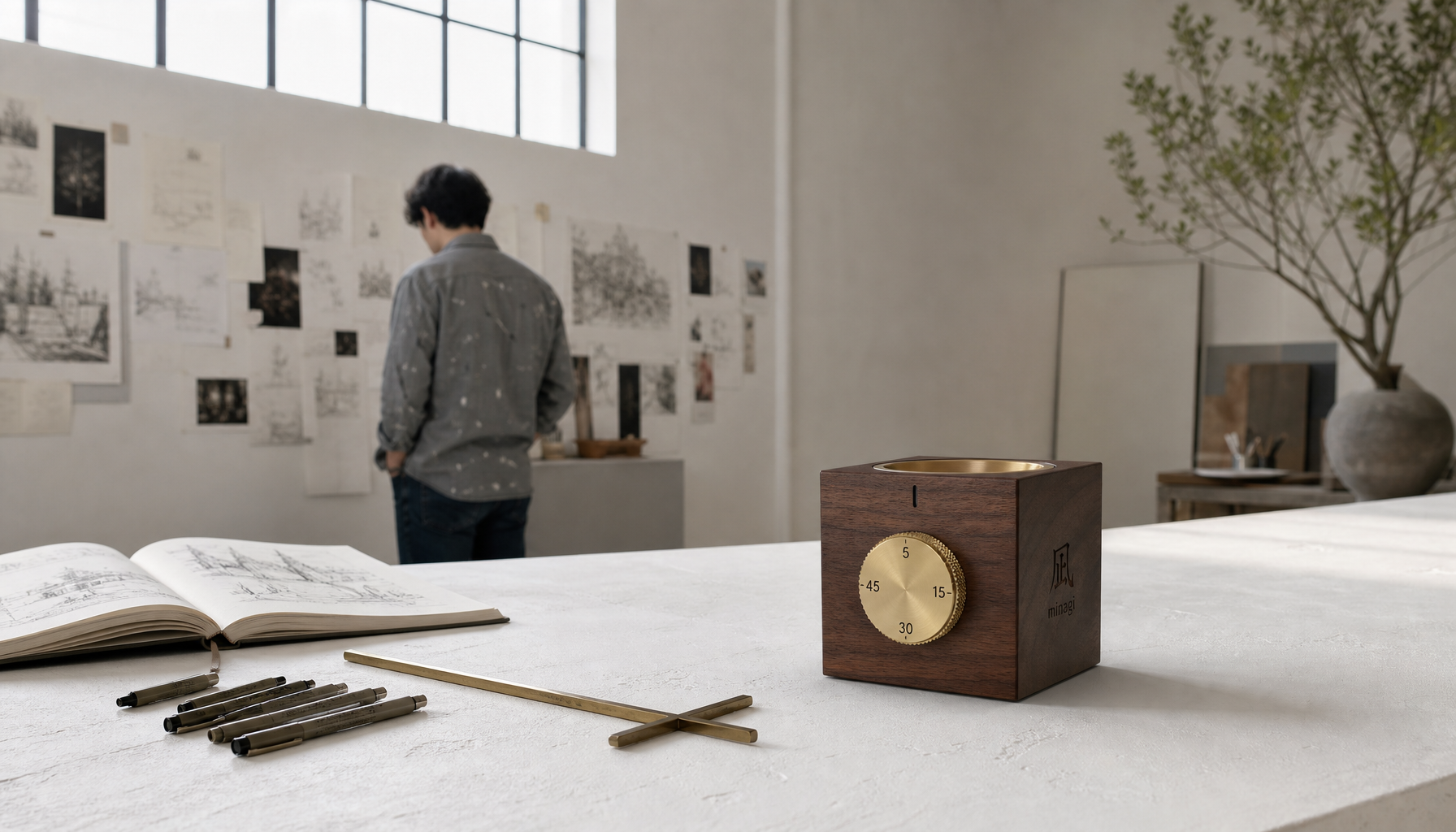
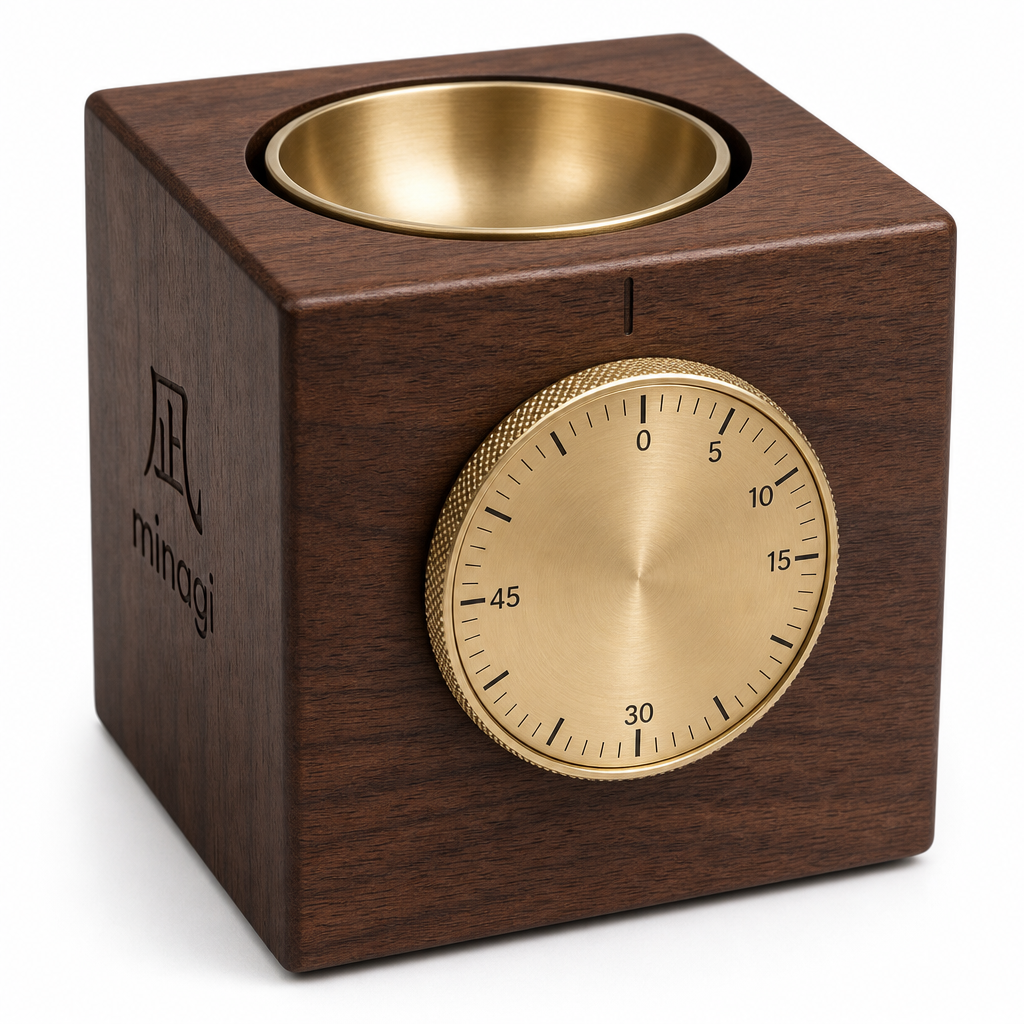
The product is nearly done. Yet it still carries The Dual as its working name. A walnut cube, a brass singing bowl, a dial you can turn to 5, 10, 15, 30, or 45 minutes. No screen, no app, no notification. What's missing: a name that fits. And naming something built on restraint, it turns out, is a different craft altogether than naming just any gadget.
A working title that loses its grip
Until the customer panel, the object goes by The Dual. That name captures the dual function: focus timer by day, singing bowl alarm by night. Two things in one object, and it felt clever.
The panel puts that very duality into question. Kill the alarm, kill the recessed e-ink screen, kill the "two-in-one" story. What's left is a mechanical focus timer and nothing else. Stronger. Cheaper. Sharper.
And then the name falls out of step with the product. The Dual describes something we've just redesigned. A name that points to two functions works against you the moment only one remains. The new name does what the product itself does: it removes.
What the name must carry
The demands are strict and partly contradictory. The name radiates calm instead of technology. It works globally without explanation. It stands as a brand, not just a description. And, critically, the domain is still available, because the obvious names are long gone.
The category is crowded with names that sound like the devices themselves. Focus, Flow, Pulse, short and snappy and English, and almost all taken. These are names that demand attention. The exact opposite of this product. We're searching for the inverse of a notification or ping: a word for the moment the noise stops.
Hibiki or nagi
The search leads to Japanese, and two words remain. The first is hibiki, 響き: the resonance, the echo that lingers in the air after the mallet strikes the singing bowl. Tempting, because sound is the most sensory part of the product, the tone toward which the entire focus block leads.
The second is nagi, 凪: the stillness that falls over water when the wind dies. Stillness that means calm after the rush, the breath between gusts.
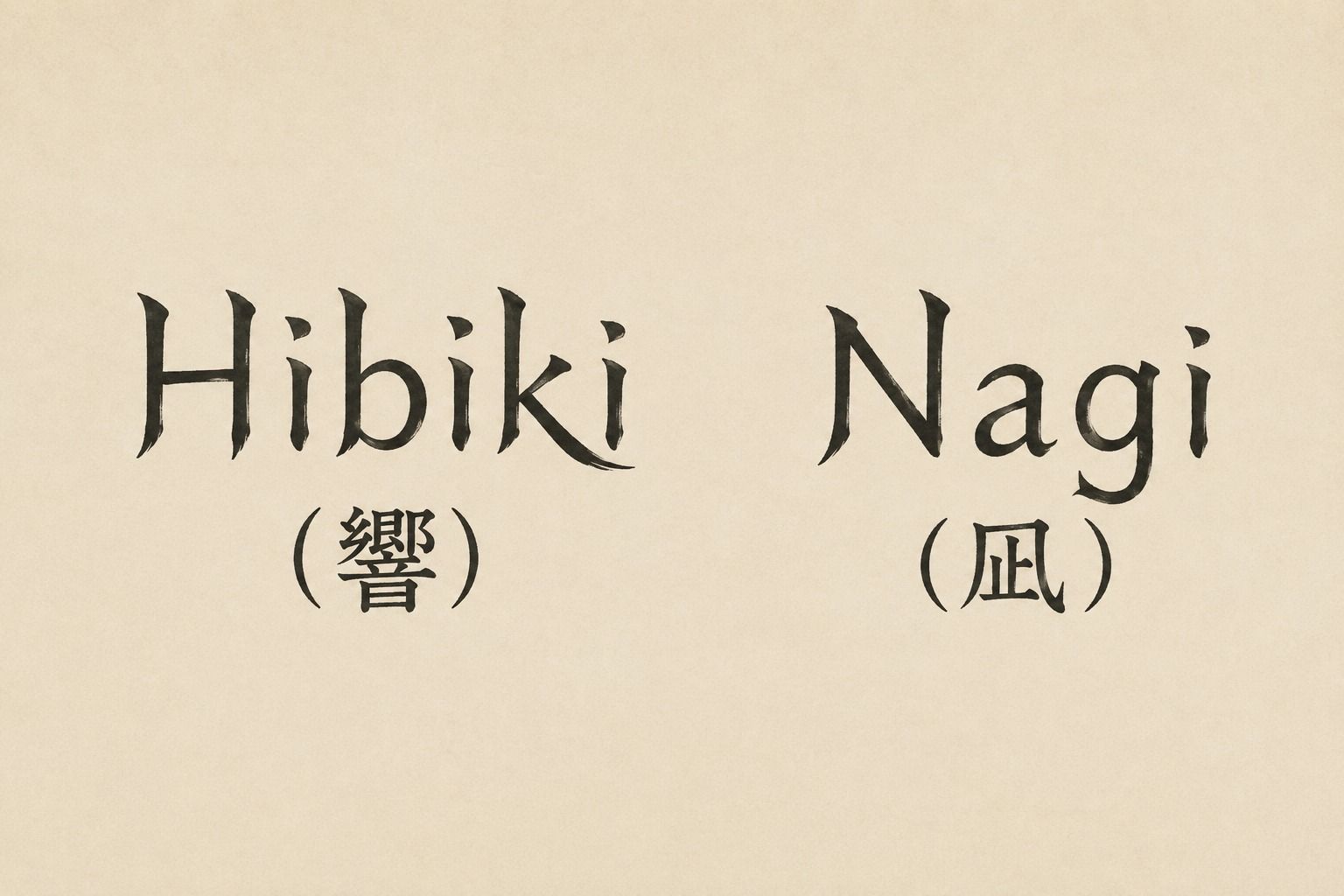
The difference between these two words is precisely the difference we make. Hibiki points to the end, to the tone, to the moment your time is up. Nagi points to what lies between: the time you work. The tone lasts three seconds. The stillness lasts the whole block. We choose the larger part.
Because a focus object is built on the absence of sound. The warm tone from the singing bowl doesn't pull you away from anything; it brings you gently back. Beautiful. And incidental. It's about the calm before. That's why nagi wins over hibiki, and 凪 gets carved into the wood as a mark of that stillness.
From nagi to minagi
Nagi alone feels too thin as a brand. Too bare, too short, too generic, and the domain is nowhere to be found. We stretch it to minagi. The Spanish mi nods to our location in Valencia. My nagi, minagi. The sound of nagi remains audible, the 凪 stays as the mark that goes into the wood, and the whole thing reads as a name rather than a word from the dictionary. The domain mi-nagi.com is free and we claim it at once.

It's a quiet name. Soft on the tongue, round in sound, free of tech-speak. You whisper it, and that suits an object you set down to find your calm.
The name does what the product does
The positioning now fits on one line: most focus tools add technology; minagi strips it away. The name does the same. It adds nothing. It only points to the calm.
And that's how it should work in this experiment. The AI delivers the directions, the options, the trade-offs. The human chooses. A name is a feeling, and that feeling is ours to own. Minagi is the first choice after the choice for the product itself.