The self-correcting trend agent
Every two weeks, a task scans the market for calm tech and wellness without anyone triggering it. After three runs, the picture shifts entirely and the scan recommends a new assignment for itself.
We keep our finger on the pulse of calm tech and focus timer trends. Every two weeks, a task runs without us lifting a finger. It works through seven fixed searches: TikTok trend reports, sleepmaxxing analysis, desk gadgets, YouTube reviews on focus, Reddit threads, Google Trends, and Pinterest Predicts. An hour later, a report lands automatically in the project folder. Fresh signals in a table, a score per product candidate, alerts, and a concrete list of scoring model categories worth attention. Complete with sources and URLs.
That's how we monitor the market. No weekly scrolling marathons. No thousand-euro-a-year trend subscription.
The setup takes us an afternoon. We feed the agent its scope (calm tech plus wellness), the project's knockout criteria (analog, format under A5, premium price range), the seven queries, the output format, and where the report lands. After that it runs on its own: every two weeks, regardless of who's logged in that day.
A table versus gut instinct
For the minagi product selection, "social momentum" counts as a weighting factor. Column 21 in our scoring model, scale 1 to 5. A number in a cell forces a judgment call: Is this theme rising, falling, or flat?
Manually, that cell stays static for months. An agent asking the same seven questions every two weeks spots movement. And movement is all that matters when tracking trends.
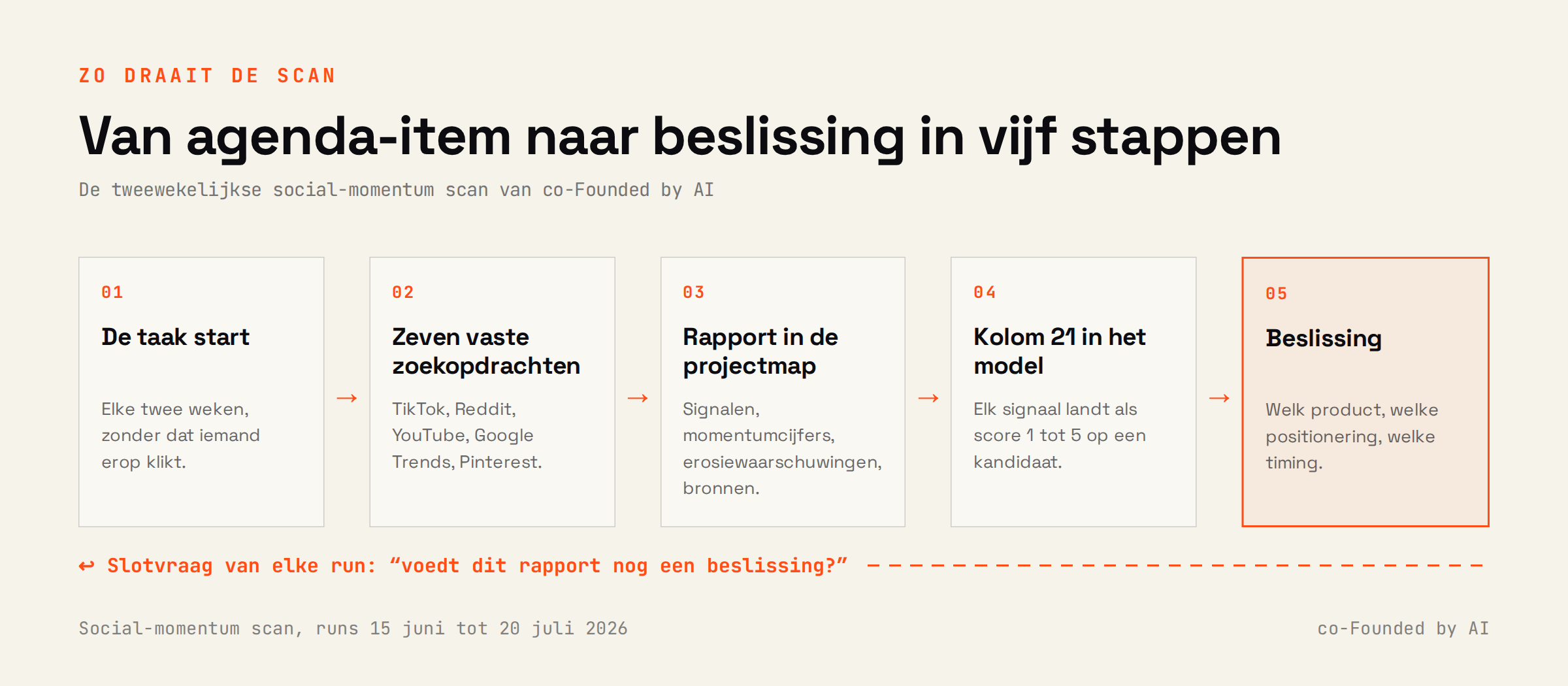
From agenda item to decision, with the final question as the fixed last step.
Three agent runs, three different answers
June 15. Sleepmaxxing pulls the entire evening segment up. The silk sleep mask, the wind-down box, and the breathing cube all score 5. The mechanical Pomodoro timer holds at 4.
July 6. Purchase fatigue emerges as a new signal. People are openly asking whether another sleep gadget even belongs on the nightstand 'clutter' pile. The sleep diary climbs to 5. The market splits into an expensive high-tech branch (Oura, Eight Sleep, Muse) and a simple analog one.
July 20. The inflection point. Dumbphones grow 25% in 2025, with a forecast of 10% market share by mid-2026. Calm tech gains recognition as a distinct design movement against dopamine-design. On TikTok, anti-nonchalance gains ground: open pleasure and authenticity displace the too-cool-to-care attitude. The mechanical timer jumps to 5, the phone jail too. The sleep candidates drop to 4, with the scientific critique of sleepmaxxing cited.
Five weeks between the first and last run. A completely different picture.
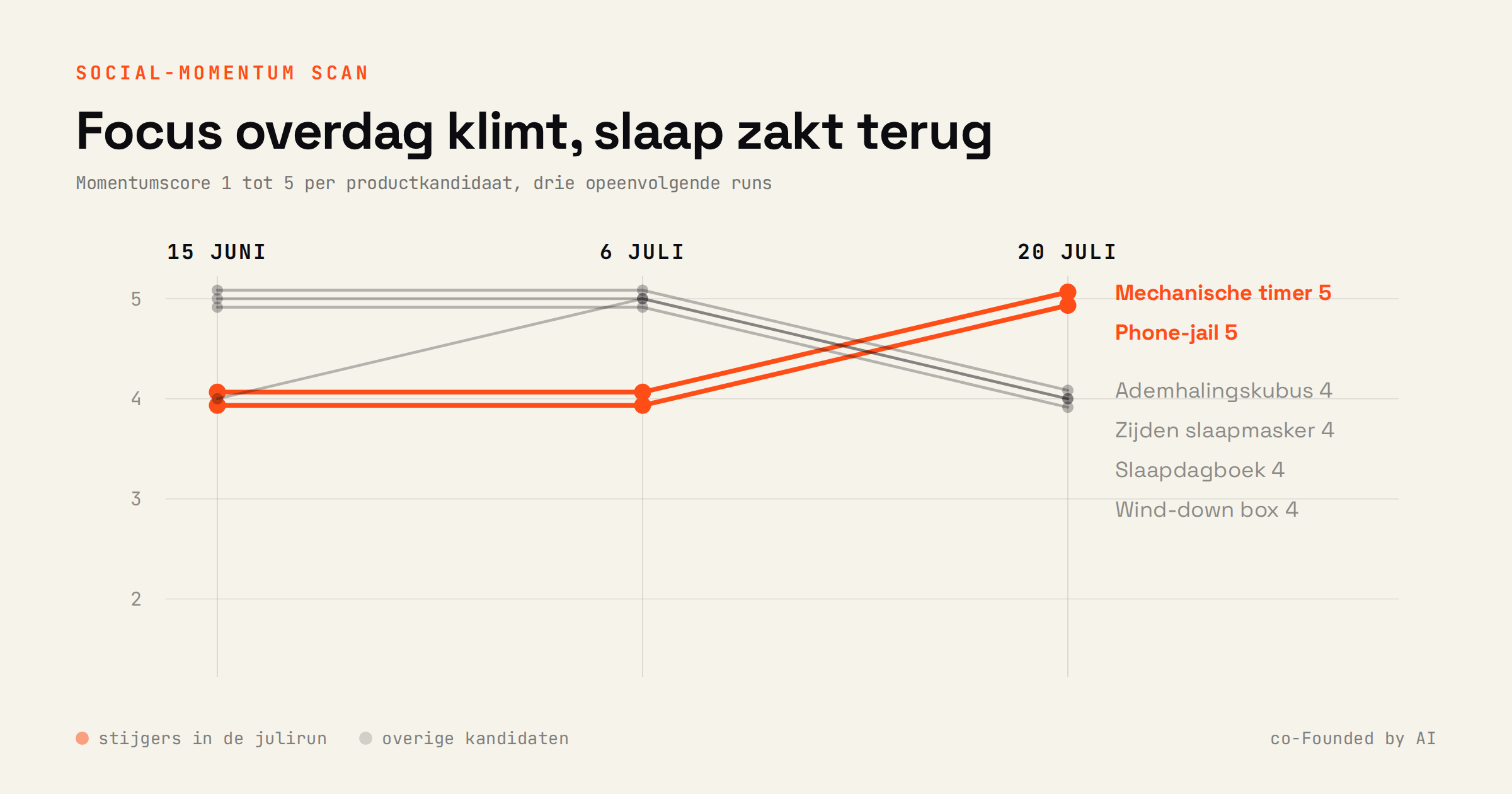
Three runs, five weeks apart. The focus candidates climb, the sleep candidates fall back.
The erosion warnings deliver as much value as the gainers. Magnesium passes a million units sold per month on TikTok Shop, with supplements hijacking the evening routine. A physical object competes there on meaning and lifespan, far from visibility and repeat purchase.
The moment the scan corrects itself
The July 20 run opens with a status note. The long-list phase is done, minagi wins the selection and enters pre-launch. The scan now delivers limited value as scoring input.
Next comes advice on the scan itself. Three options sit on the table: shut it down, retool it into a launch-scan for minagi with different search queries (analog focus tools, Kickstarter campaigns in calm tech, dumbphone communities), or retool it into a content radar feeding the week log. The agent picks option two, with reasoning attached: it aligns with the next decision on the table, the Kickstarter timing.
A recurring agent that questions her own assignment delivers more than an agent that dutifully keeps running. The question "does this report still feed a decision?" belongs built into every automation as a fixed final paragraph.
The full July 20 report is here: ProductAI Social-Momentum Scan, July 20, 2026 (PDF).
What the scan delivers to minagi
Three observations from the July run go straight into product copy.
The dumbphone figure proves people will pay for less. A quarter growth in a category that strips away everything a smartphone adds; that's highly relevant for us.
"Calm tech" now exists as a named movement. That term belongs on the site and in schema markup, because searchers and language models recognize it.
And minagi positions itself as a daytime focus tool, away from the sleep segment. The sleepmaxxing angle now draws criticism from sleep scientists.
For the digital professional
Set up a recurring scan with fixed search queries and a fixed output format. The value lies in repetition: the same questions at different moments make change visible. Standalone trend reports rarely deliver that shift.
Tie the output to a cell, a score, or a decision point. A report with a purpose changes decisions.
Let the scan evaluate itself. One paragraph at the end suffices, asking whether this rhythm fits the phase the project is in.
The next run goes live August 3. With a new assignment.
Sources: WebProNews on dumbphone growth, Accio: dumbphone trend, Contra: Calm Tech 2026, SocialBee: TikTok trends July 2026, Healthline on sleepmaxxing criticism, Pinterest Predicts 2026, Pranamat: digital detox trends 2026