
The Winners
Time to narrow down to a top three product. But how? AI helps us through this final, tricky stage.
When the AI Consensus Report dropped, it landed on a single line: five AI models independently flagged the same three products. That felt like a conclusion. Turns out it was just the opening shot.
The jury expands to five
The original plan was to put those three consensus products straight to a customer panel. But between "AI picks this" and "consumer buys this" sit four questions the models can't answer. What does the product actually look like? Does it beat the incumbent market leader? Will it hold up legally? And most critically: how do you manufacture it?
So we cast five personas as judges for each product. A designer, a consumer, a lawyer, a competitor, and a product engineer. Only when all five say yes do we move forward.

The result: three sharply defined products instead of three fuzzy concepts.
The Winners
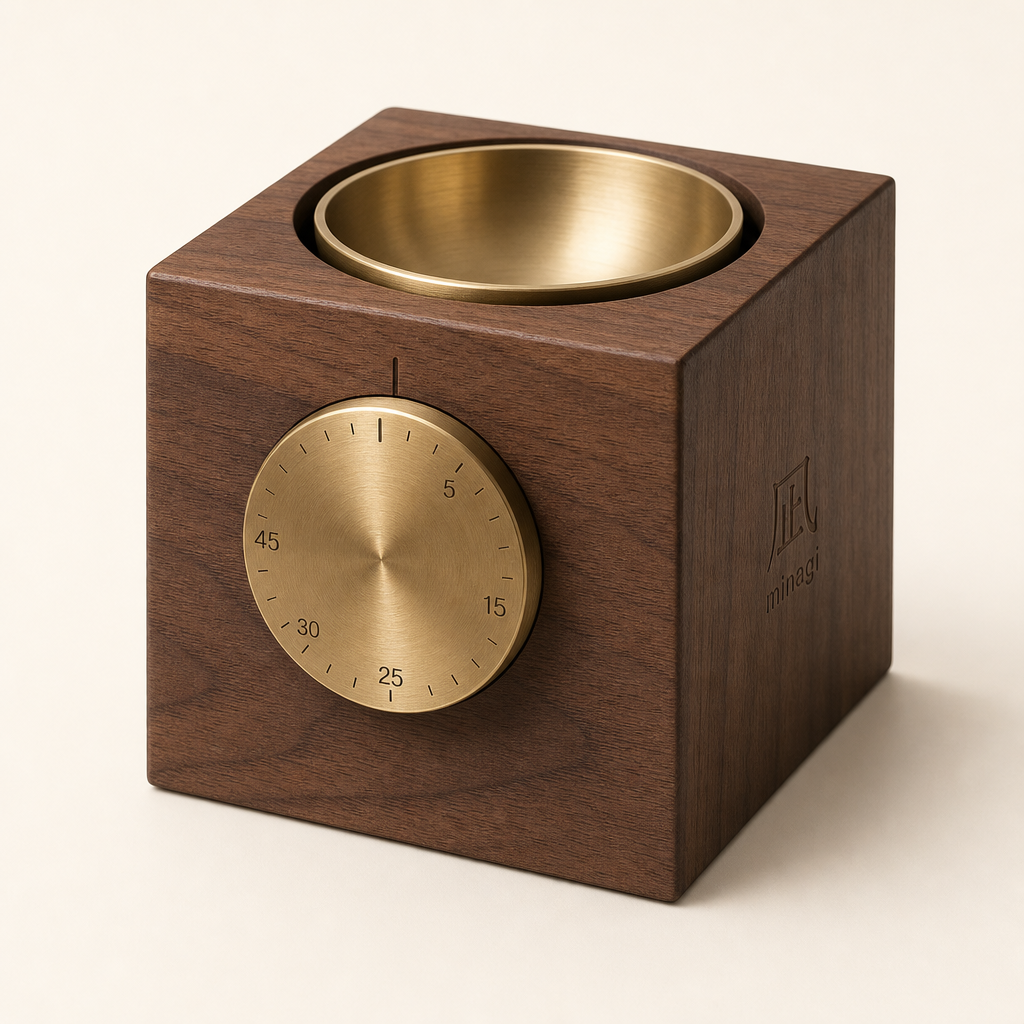
The Dual wins in the focus and awakening category. A walnut cube, 9 by 9 by 9 centimeters, with a brass soundplate on top, a brass dial knob at the front, a slide switch on the side. And, as the product designer insisted, a recessed e-ink screen. Because an alarm clock without a screen means your phone stays on the nightstand, and that's exactly what we don't want. The screen stays softly visible at all times, like an old-fashioned watch face. No glow, no tapping required. Retail price €149.
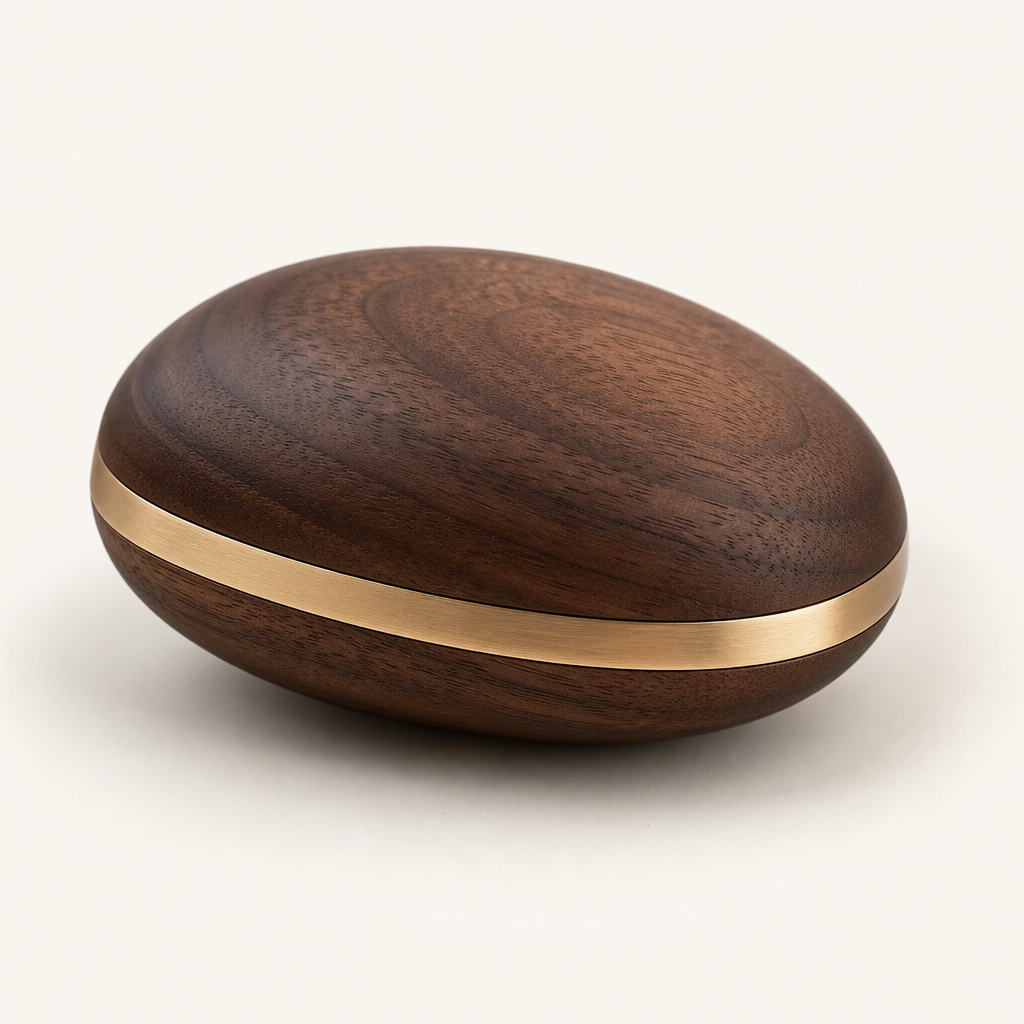
The Wave wins in the breath coach category. A walnut pebble carved from a single piece of wood, with a brass band around the middle that doubles as the mode selector. Four modes: Calm for stress, Sleep for falling asleep, Focus for meditation and coherent breathing, Reset for acute anxiety. The tactile experience comes from a linear vibration motor, not the cheap buzz your phone knows. The wood acts as a resonance chamber, amplifying the sensation without making a sound. Retail price €119.
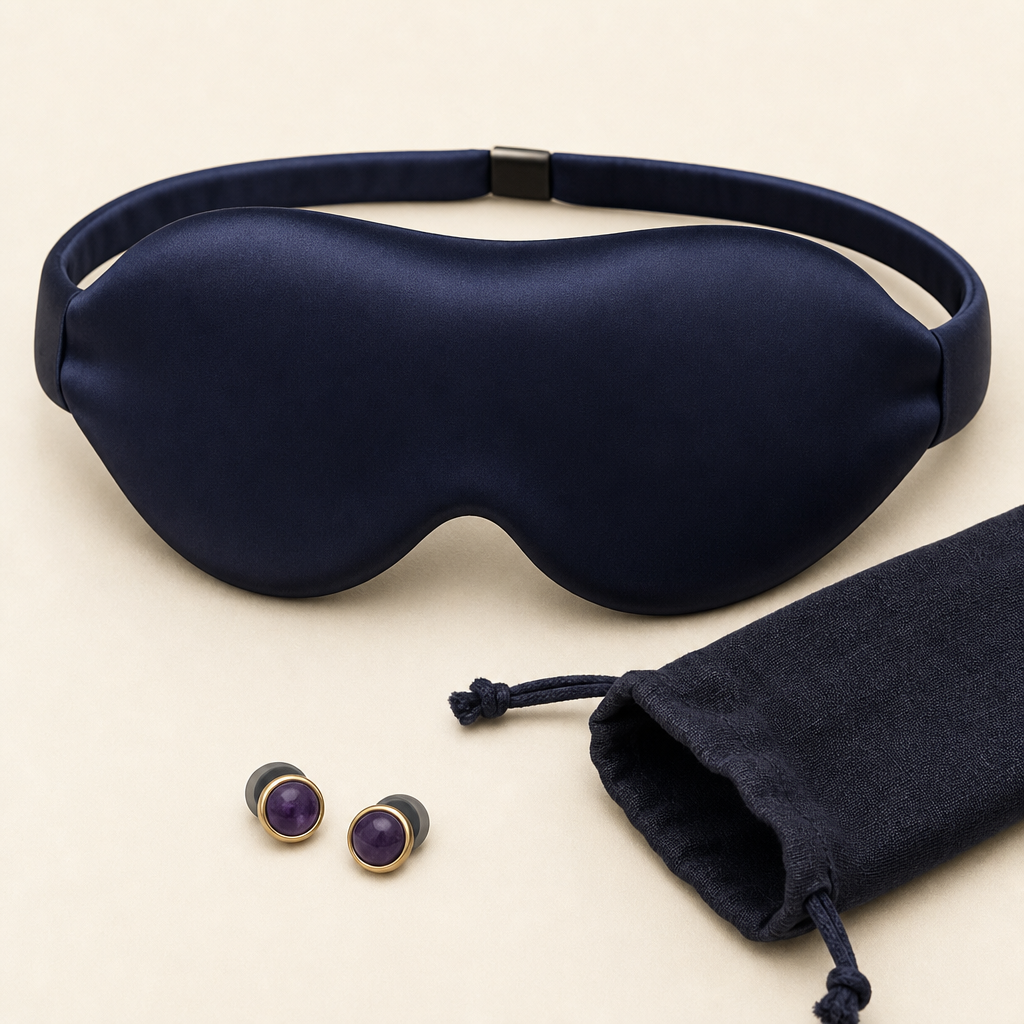
The Night Set wins in the sleep category. A 3D-contoured silk sleep mask where soft silk wings wrap around the temples, with a magnetic closure at the back. No side clip, because side sleepers hate those. Comes with two earplugs topped with hand-polished amethyst and a linen storage pouch. Retail price €99.
The internals come into view
A major change between version 1 and version 2 of the jury report: cross-sections. For both The Dual and The Wave, we show what's inside the object. Not to impress an engineer, but to explain to a user why the premium price is justified.
The mechanical soundplate regulator (click mechanism) of the focus timer runs independently of the battery. If power goes out, it keeps ticking; only the alarm soundplate cuts out. The vibration element in The Wave is custom-made, not a catalog part. The battery is replaceable via four screws. Repairability isn't a gimmick, it's a requirement.
Valencia as the production hub
Meanwhile, we're scoping where to manufacture these products. The apartment in Valencia is a logistics advantage we don't want to waste. Valencia has the woodworking tradition (FIMMA Maderalia, Spain's largest timber trade fair, runs November 10-13, 2026), the furniture cluster in Yecla an hour and forty minutes away, ceramic heritage in Manises ten kilometers out, and serious industrial capacity for final assembly.
What Valencia lacks: brass craftsmanship at the level of Pforzheim or Vicenza, 22 momme mulberry silk like Como's, and lapidary tradition (stone cutting) like Idar-Oberstein. We'll source those four pieces elsewhere in the EU. The hub, assembly, and quality control stay in Valencia.
The app gets an upgrade
Meanwhile, we've got a briefing ready for Claude Code. The Idea Generator app, which we built earlier to visualize the 53 longlist products, gets an upgrade: the three winners get a 'WINNER' badge, their longlist name stays as a historical label, and there's a separate tab with the cross-section and commercial figures for each winner. One place where the whole story is visible, from initial shortlist to finished design.
Claude Code handles the code changes; we just write the briefing. A perfect demonstration of what the brand is about: AI does the work, people set the direction.
Next step
The customer panel is coming. Three separate product sheets are ready, one for each winner, four pages each. Numbered questions for the focus group, interview checklist and 1-on-1 interviews. From there to industrial design and prototype. In a month or two, the first decision lands: does the final product make it to shelves, or not.